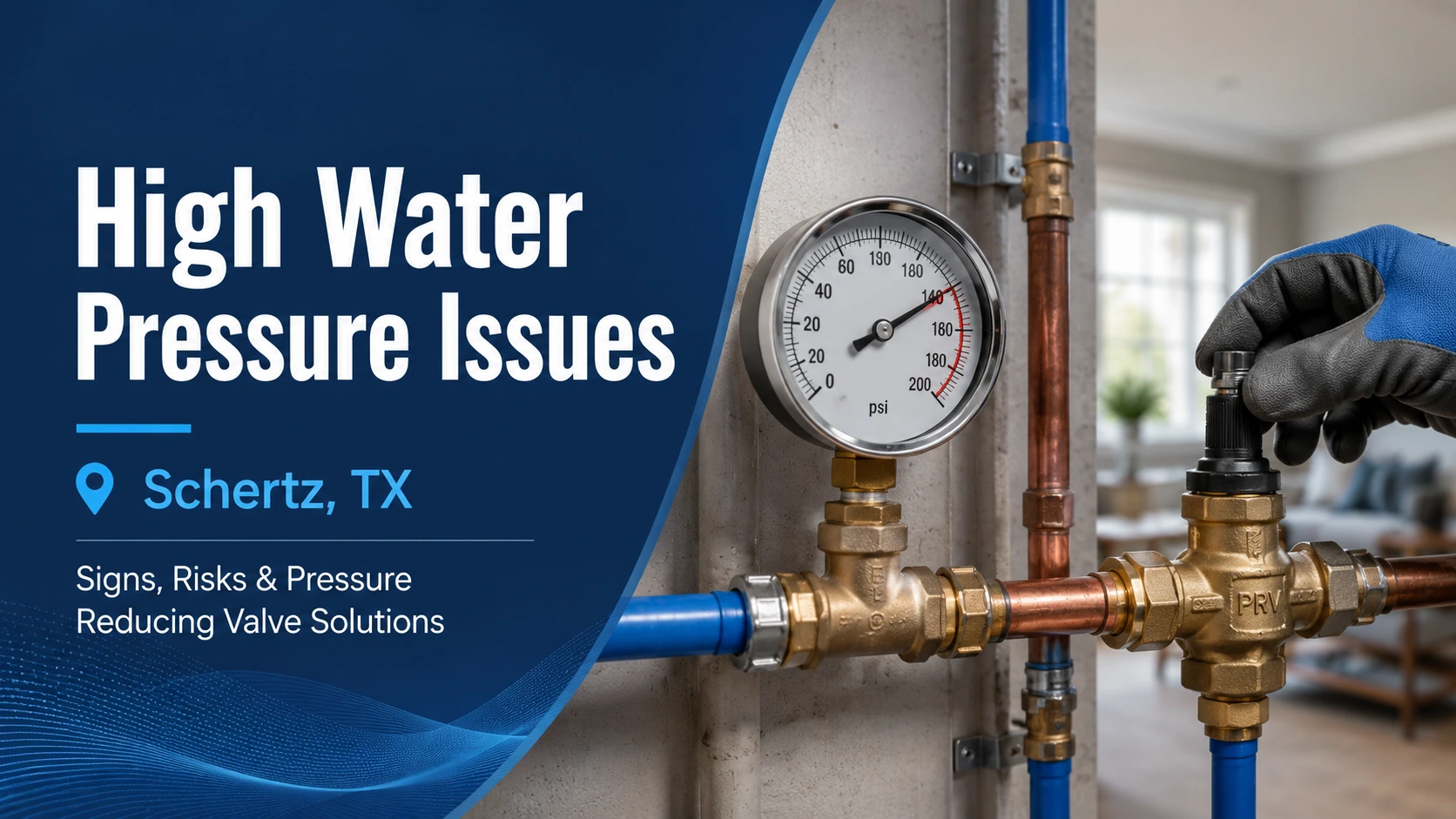
High water pressure is a common issue in Schertz, TX, caused by fluctuations in the municipal supply, elevation differences, and aging plumbing and regulatory systems. While strong water flow may seem normal, excessive pressure can slowly damage pipes, fixtures, water heaters, and household appliances over time. It may also lead to leaks, noisy plumbing, and higher repair costs if left untreated.
If you are noticing these problems and looking for a reliable solution, understanding how pressure-reducing valves work can help protect your plumbing system. In this blog, we’ll help you identify the signs and risks and explore effective PRV solutions for managing high water pressure.
In this blog, we’ll explore how high water pressure can damage your plumbing system and what you can do to prevent costly repairs.
High Water Pressure System Key OverviewHigh water pressure in Schertz, TX, often results from municipal supply, thermal expansion, and faulty or missing PRVs, which can stress plumbing systems. Common signs include pipe noise, leaks, and appliance wear. Safe residential range is 40–60 PSI, with risks above 60–80 PSI. Proper inspection, pressure testing, and PRV installation help stabilize flow, prevent damage, and extend system lifespan by enabling controlled regulation and timely repairs throughout the system. |
What is causing High Water Pressure Damages in Schertz, TX?
City water supply systems, elevation, and pipe changes typically cause high water pressure. Several common factors contribute to this issue, including:
Extreme Elevation Variation Within City Limits
Schertz spans an elevation range of about 250 feet (636 ft to 886 ft). According to the City’s Water Department, it is impossible to maintain one constant pressure zone across the area. As a result, homes at lower elevations naturally experience higher water pressure due to the region’s topography.
Hard Water from the Carrizo-Wilcox Aquifer
The local water supply is mineral-rich, containing calcium and magnesium. Over time, these minerals build up scale inside pipes, narrowing the flow of water. This buildup can also corrode older copper plumbing from the inside, making systems more vulnerable to existing high water pressure.
Faulty or Missing Pressure Regulating Devices
Texas and Schertz regulations require a pressure-regulating valve (PRV) when pressure exceeds 80 PSI. However, PRVs typically last only 7–12 years before PRV replacement becomes necessary. In many older homes, these devices often require PRV repair or are no longer functioning properly. .When this happens, high municipal pressure often above 80 PSI can flow directly into home plumbing without control.
Signs of High Water Pressure Include
Here are some signs that indicate excessive force within the plumbing components:
- Loud banging sounds in pipes (caused by sudden pressure surges moving through water lines)
- Leaking faucets and constantly running toilets (due to worn internal seals under stress)
- Frequent pipe joint failures (because connections weaken under sustained force)
- Shortened appliance lifespan (as internal valves and hoses operate under excess load)
- Overly forceful water spray from taps (indicating pressure beyond standard residential levels)
When these issues occur together or continue to worsen, it’s a clear sign you need a professional plumber immediately, as the system may already be under excessive pressure.
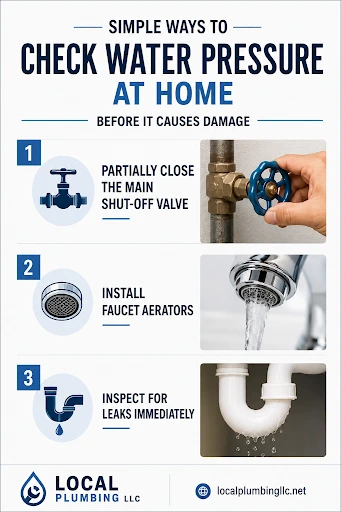
Simple Ways to Check Water Pressure at Home Before It Causes Damage
A pressure gauge is a small tool that can be attached to an outdoor water tap, also called a hose bib, which is the external faucet where a garden hose connects. It helps measure the water pressure inside your home’s plumbing system. Here are other methods that can be used to check water pressure:
When a Pressure Reducing Valve Becomes Necessary?
A Pressure Reducing Valve (PRV) is required when the static incoming water pressure exceeds the operating range. Here’s why you need it:
When Municipal Supply Pressure Exceeds 80 PSI
IPC Section 604.8 requires a PRV when incoming pressure exceeds 80 PSI. The EPA recommends 45–60 PSI for optimal system performance. Many municipal systems intermittently exceed 100 PSI. Without regulation, excess static pressure continuously loads piping, accelerating fatigue, joint stress, and fixture degradation.
When Appliances Are Breaking Down Prematurely
Household appliances are typically rated for a 40–80 PSI operating range. Sustained overpressure damages inlet valves, seals, and solenoids, reducing service life. Recurrent failures in dishwashers, water heaters, or RO systems often indicate systemic high-pressure conditions rather than isolated component faults.
When You Hear Water Hammer (Banging Pipes)
Water hammer indicates excessive flow velocity and sudden deceleration within the piping system. High pressure increases shockwave intensity during valve closure, stressing joints, fittings, and soldered connections. Pressure regulation reduces velocity-driven hydraulic shock and stabilizes transient pressure spikes.
When the Home Has a Closed Plumbing System with a Water Heater
Closed systems with backflow preventers or check valves trap thermal expansion from water heaters, causing internal pressure buildup. Combined with high incoming pressure, this can exceed safe operating limits and trigger T&P valve discharge or tank stress. PRVs are essential to control baseline system pressure in such configurations.
When Faucets, Toilets, or Fixtures Leak Repeatedly
Recurring leaks in faucets, toilets, or supply lines often indicate sustained overpressure beyond seal design tolerances. Elevated PSI accelerates wear on O-rings, washers, and valve seats. Pressure regulation to 50–60 PSI reduces mechanical stress and prevents premature fixture failure.
How Local Plumbing LLC Fixes High-Pressure Problems in Schertz, TX
Local Plumbing LLC offers reliable, quality service, state-of-the-art diagnostic equipment, and trained professionals to help solve your plumbing challenges for residential and commercial properties in Schertz, TX. High water pressure problems in Schertz are addressed through precise system diagnostics, PRV installation or adjustment at the main inlet, and thorough pressure balancing across the plumbing network. The team ensures safe PSI levels, repairs stress-damaged fixtures, and restores long-term system stability and efficiency throughout the property.
Conclusion
If high water pressure is a problem, it must be addressed, as it can cause pipes, fixtures, and appliances to deteriorate over time. When selecting a plumbing service, opt for one that offers expertise in diagnosing issues, managing water pressure, and ensuring long-term protection for the system.
Call a professional today to keep your plumbing system safe and stable, know what to do if a pipe starts leaking, and maintain the correct water pressure.”
FAQs
What are the ways for plumbers to ensure that pressure damage has already taken place?
They look for signs of joint fatigue, valve wear, and micro-leaks; they also analyze pressure history and determine if system deterioration is due to stress.
Are underground or slab piping systems affected by high water pressure?
Yes, pressure stress over time can weaken the joints and fittings in the pipes, and may lead to either slab or underground leaks.
Why do some homes need pressure adjustments after municipal water line work?
City maintenance or pipeline upgrades can temporarily alter supply pressure, sometimes requiring residential plumbing systems to be recalibrated afterward.
Why do pipes sometimes vibrate even when water is not running?
Pressure fluctuations in the plumbing system can cause pipes or valves to move, especially when pressure remains unstable overnight.
Does replacing old plumbing fixtures automatically solve pressure problems?
No, replacing fixtures alone usually does not correct system-wide pressure imbalance if the incoming supply pressure remains excessively high.